
The kit is ready. The workflow isn't.
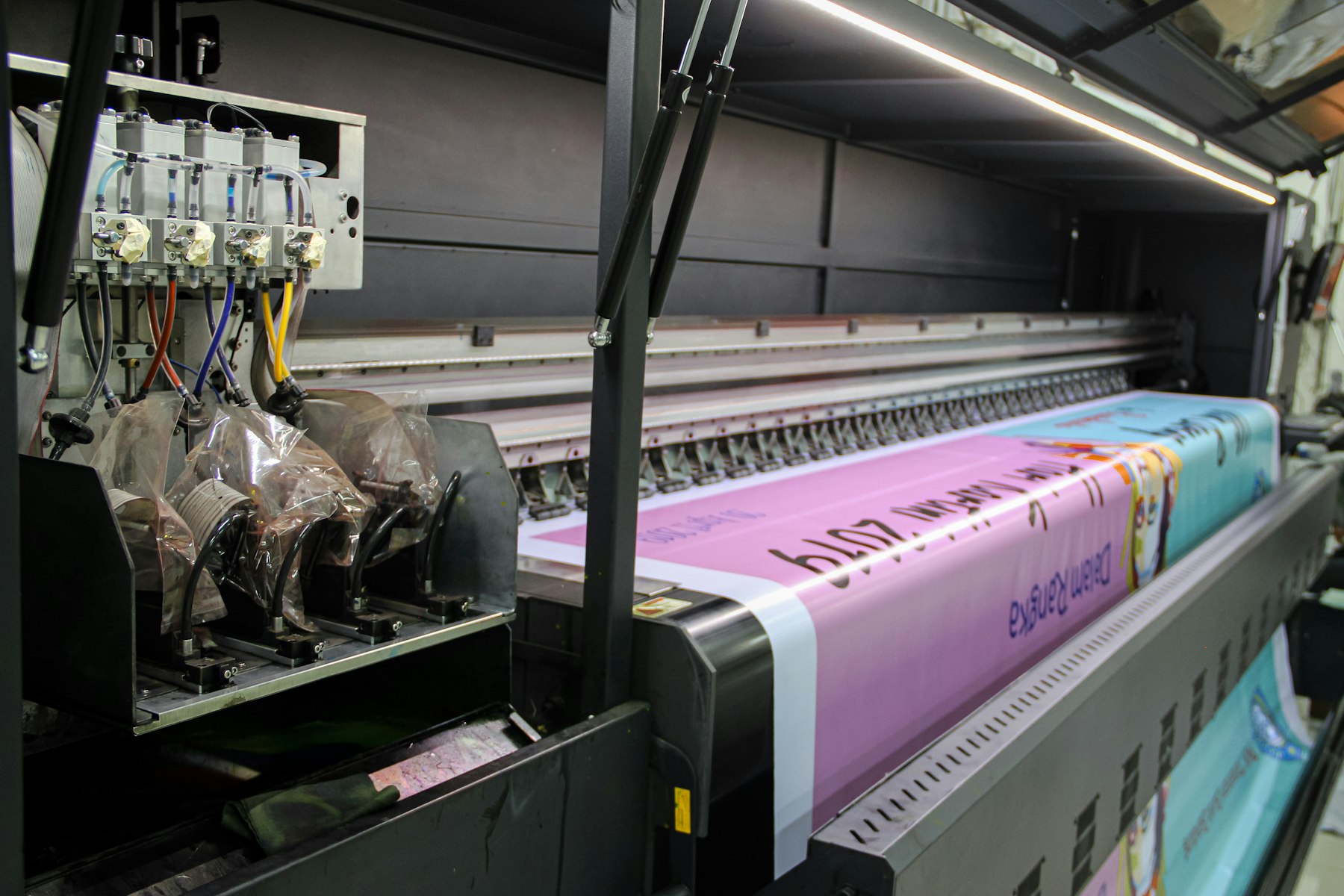
Wide-format shops keep adding capability: soft signage, DTF, new flatbeds. Each adds its own RIP, its own file rules and its own manual handoffs, while retail rollouts grow in stores, versions and delivery points.
Three things the research says.
AI adoption is splitting the market
57% of wide-format professionals already use AI; 26% have no plans at all.
Large Format Review, Wider Perspective 2025Adjacencies are the growth path
Wide-format PSPs are adding soft signage and DTF next to their UV and dye-sublimation kit.
The Integration Gap, section 1Integrated workflow is the next step
The industry conversation has moved beyond the RIP to connected wide-format workflow.
FESPA, 2025Four handoffs, every order.
Each one is a person bridging two systems. Each one is a place where orders wait, errors creep in and margin leaks out.
The expensive part isn't the software. It's the people bridging the gaps between the software.
- 01Rollout lists live in spreadsheets, per store and per itemStandardization
- 02Artwork checked by eye against each substrate's specAutomation
- 03Jobs routed to devices by whoever knows the kitAutomation
- 04Installers and carriers updated by phoneOrchestration
Four layers, applied to wide-format and sign.
Before and after Atomyx Manage.
Without Atomyx
- Rollout lists live in spreadsheets, per store and per item
- Artwork checked by eye against each substrate's spec
- Jobs routed to devices by whoever knows the kit
- Installers and carriers updated by phone
With 
- Every store, item and version is a record, tracked to delivery
- Atomyx Prepare preflights against the right profile automatically
- Rules route each item to the right device and finishing step
- Delivery and install status flow back to the customer view
Every source, one data model.
Whatever arrives, from a storefront webhook to a supplier file, a transformer maps it into the objects you define. Setup is guided by AI through MCP, and every transformer is previewed on real records before it goes live.
Explore transformers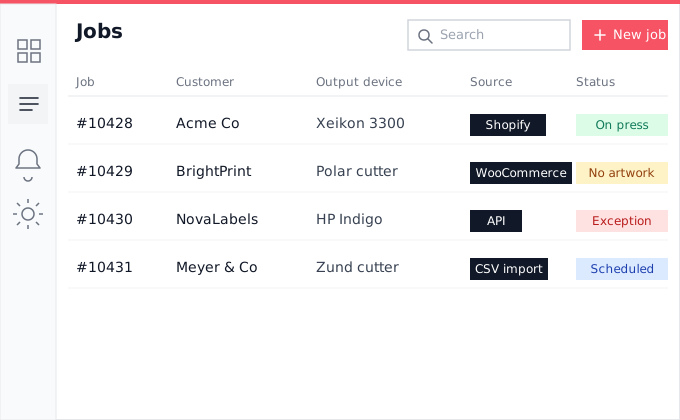
Start with one order.
Map one order from intake to delivery, including every handoff.
Classify each manual step as a standardization, integration, automation or orchestration gap.
Close the orchestration gap first. It is where most of the cost sits, and it makes every other fix worth more.
Map one order flow with us.
A 45-minute Integration Gap Review. We trace one real order from intake to delivery and send you the gap map with a validated saving, whatever you decide.
- Every handoff in one order flow, mapped
- Each manual step classified as a standardization, integration, automation or orchestration gap
- A validated saving, checked against the real order
- A clear first move, with or without Atomyx
